Mastering Functional Training for Everyday Strength
Functional training is less about lifting the heaviest weights and more about moving better in real life. It focuses on building strength, stability, and mobility in patterns you actually use every day: squatting, hinging, pushing, pulling, rotating, and carrying. When done well, it makes walking up stairs easier, carrying groceries safer, and long days at a desk less damaging.
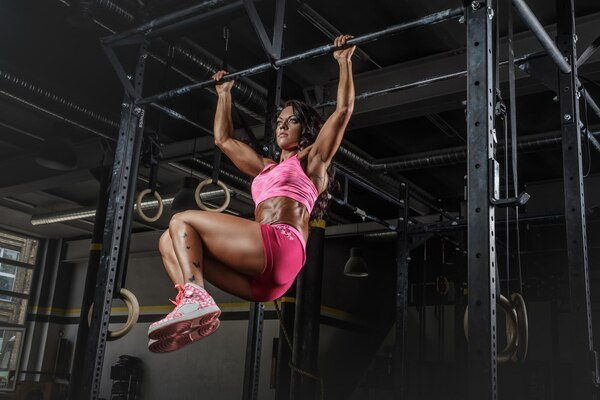
Below is a structured guide to mastering functional training so you can translate your gym work directly into everyday strength.
What Is Functional Training?
Functional training is a method of exercise that:
- Trains movements, not muscles in isolation
- Uses multiple joints and muscle groups at once
- Builds coordination, balance, and core stability
- Mimics or supports everyday tasks and sports
Instead of focusing on how a movement looks on paper (e.g., “biceps day”), the emphasis is on how your body performs as a complete system.
Examples:
- Squats → sitting down and standing up, getting out of a car
- Hip hinges (like deadlifts) → picking something up from the floor
- Loaded carries → carrying bags, kids, luggage
- Rotational work → turning, reaching, throwing, reacting
The payoff is not only increased strength, but also better movement quality and resilience against injury.
Core Principles of Functional Training
1. Movement Patterns Over Muscle Groups
Organize training around patterns:
- Squat (knee-dominant)
- Hinge (hip-dominant)
- Push (horizontal and vertical)
- Pull (horizontal and vertical)
- Lunge / single-leg
- Rotate and anti-rotate
- Gait (walking, running, marching, carrying)
This ensures you train your entire body in the way it’s meant to move.
2. Multi-Joint, Multi-Planar Exercises
Life isn’t limited to one plane of movement. Functional training uses:
- Sagittal plane (forward/back): squats, deadlifts, push-ups
- Frontal plane (side-to-side): lateral lunges, side steps
- Transverse plane (rotation): chops, woodpeckers, rotational throws
Working all three helps you handle real-world demands, where twisting, reaching, and changing direction are constant.
3. Stability Before Intensity
If you can’t stabilize, you can’t truly use your strength. Solid functional training:
- Strengthens the core (not only abs, but deep stabilizers, glutes, hips, and back)
- Trains balance and control on one leg and under load
- Uses progressive overload without sacrificing form
Only increase weight or complexity when you can move well.
4. Quality Reps Over Maximal Effort
Functional training prioritizes:
- Controlled tempo
- Full, pain-free range of motion
- Proper breathing
- Consistent technique across all reps
Instead of chasing exhaustion, you chase movement mastery.
How Functional Training Translates to Everyday Strength
Better Posture and Less Pain
Weak glutes and core, tight hip flexors, and rounded shoulders are typical of long hours sitting. Functional training:
- Strengthens the back and hips
- Opens up tight areas through active mobility
- Reinforces neutral spine and scapular control
This often reduces back, neck, and shoulder discomfort.
Safer Lifting and Carrying
Deadlifts, squats, and carries teach you:
- How to hinge at the hips instead of rounding your back
- How to brace your core when lifting something heavy
- How to distribute load evenly between both sides
These skills directly reduce the risk of strains when lifting in daily life.
Increased Daily Capacity
With functional strength:
- Stairs feel easier
- Long walks don’t fatigue you as quickly
- Yard work, cleaning, and household tasks are less draining
You’re not just stronger in the gym; you have more usable energy in your day.
Key Functional Movement Categories and Example Exercises
Below are core categories with accessible examples you can build around.
1. Squat Pattern
Purpose: Strengthen legs and hips, improve everyday sitting/standing.
Exercises:
- Bodyweight squat
- Goblet squat
- Box squat
- Split squat
Coaching tips:
- Feet roughly shoulder-width, toes slightly out
- Sit “between” your hips, not onto your toes
- Knees track in line with your toes, not collapsing inward
- Keep ribs stacked over hips; avoid rounding the back
2. Hinge Pattern
Purpose: Build posterior chain strength (glutes, hamstrings, back) for safe lifting.
Exercises:
- Hip hinge with dowel or broomstick
- Romanian deadlift (dumbbells or barbell)
- Kettlebell deadlift
- Hip thrust or glute bridge
Coaching tips:
- Push hips back as if closing a car door with your butt
- Maintain neutral spine; avoid rounding
- Slight bend in knees, but movement starts at the hips
- Feel stretch in hamstrings, then drive hips forward to stand tall
3. Push Pattern
Purpose: Build upper-body strength used in pushing doors, getting off the floor, and bracing.
Exercises:
- Incline push-up (hands on bench or wall)
- Floor push-up
- Dumbbell bench press
- Overhead press (standing, with dumbbells)
Coaching tips:
- Keep body in a straight line in push-ups; no sagging hips
- Elbows at about 30–45° from body, not flared wide
- In overhead pressing, avoid hyperextending the lower back; ribs down, glutes tight
4. Pull Pattern
Purpose: Build upper-back and grip strength for pulling, holding, and posture.
Exercises:
- Bent-over dumbbell row
- Inverted row (under a bar or TRX)
- Lat pulldown
- Assisted or banded pull-up
Coaching tips:
- Lead with elbows, not hands
- Squeeze shoulder blades toward your spine, then down into your back pockets
- Avoid shrugging shoulders toward your ears
5. Single-Leg and Lunge Patterns
Purpose: Improve balance, stability, and unilateral strength.
Exercises:
- Reverse lunge
- Step-up
- Single-leg RDL (Romanian deadlift)
- Bulgarian split squat
Coaching tips:
- Press through full foot, not just toes
- Keep front knee tracking over mid-foot
- Move slowly to control wobbling; use support if needed at first
6. Core: Anti-Movement Strength
Purpose: Resist unwanted movement, which is more functional than endless crunches.
Types:
- Anti-extension (resisting arching): dead bug, plank
- Anti-rotation: Pallof press, suitcase carry
- Anti-lateral flexion (resisting side bending): side plank, farmer’s carry
Coaching tips:
- Think “brace like you’re about to be lightly punched in the stomach”
- Breathe normally while keeping core tight
- Stop sets when you lose alignment or start compensating
7. Carries and Gait
Purpose: Connects grip, core, and lower body in a dynamic, real-world way.
Exercises:
- Farmer’s carry (weights in both hands)
- Suitcase carry (weight in one hand)
- Front rack carry (weights at shoulders)
- Overhead carry (weight overhead)
Coaching tips:
- Stand tall, walk slowly and under control
- Do not let weights pull your shoulders forward or down excessively
- If unilateral, avoid leaning to the side; resist the pull
Structuring a Functional Training Program
You don’t need complex periodization to benefit. For general everyday strength, 2–4 sessions per week is effective.
Basic Weekly Structure (3 Days)
- Day 1: Full body (heavier, simpler lifts)
- Day 2: Full body (lighter weights, more single-leg and core)
- Day 3: Mixed strength and conditioning (circuits, carries)
Example Full-Body Session
Warm-up (5–10 minutes):
- Light cardio (bike, brisk walk) 3–5 min
- Dynamic mobility: leg swings, hip circles, arm circles, cat-camel 2–5 min
- Activation: glute bridges, dead bugs, scapular wall slides, 1–2 sets each
Strength (choose 1 exercise from each category):
- Squat: Goblet squat – 3 sets of 8–10
- Hinge: Kettlebell deadlift – 3 sets of 8–10
- Push: Incline push-up – 3 sets of 8–12
- Pull: Dumbbell row – 3 sets of 8–10 each side
- Single-leg: Reverse lunge – 2–3 sets of 6–8 each leg
- Core: Pallof press – 2–3 sets of 10–12 each side
- Carry: Farmer’s carry – 2–3 carries of 20–40 meters
Choose a weight that is challenging but allows 1–2 “good reps” left in the tank at the end of each set.
Progression: How to Keep Getting Stronger
To “master” functional training, you must progress gradually while preserving form.
Ways to progress:
- Increase load (heavier weights)
- Increase volume (more sets or reps)
- Slow down tempo for more control (e.g., 3-second lowering)
- Add complexity (from bilateral to unilateral, from stable to slightly unstable)
- Shorten rest intervals (for conditioning, not at the cost of technique)
Only change one or two variables at a time, and maintain clean execution.
Red flags you’re progressing too fast:
- Persistent joint pain (not just muscle soreness)
- Technique falling apart early in sets
- Needing momentum or “cheating” for every rep
Dial back intensity if these appear.
Common Mistakes in Functional Training
- Chasing novelty instead of fundamentals
Constantly rotating fancy exercises (Bosu ball tricks, complicated flows) without mastering basics.
- Skipping strength for only mobility or only conditioning
Mobility and cardio are important, but they don’t replace progressive strength work.
- Poor technique with “functional” tools
Kettlebells, battle ropes, and suspension trainers are excellent, but using them with sloppy form is still unsafe.
- Ignoring recovery
Everyday strength improves when you layer training onto good sleep, nutrition, and stress management.
Integrating Functional Training Into Your Lifestyle
For Beginners
- Start with 2 sessions per week, 30–45 minutes each
- Master bodyweight versions before adding load
- Focus on 4–6 core exercises per session, not long, exhausting routines
For Desk Workers
- Add short “movement snacks” throughout the day: squats, hip hinges, band pull-aparts
- Prioritize hip mobility and upper-back strength in your workouts
- Include regular walking and carries to reinforce posture and gait
For Aging Well
- Emphasize balance, single-leg strength, and power (light, fast movements done safely)
- Keep loads moderate but consistent
- Practice getting up and down from the floor in different ways (vital functional skill)
Safety and Individualization
Functional training should fit your body, not the other way around.
- Work within pain-free ranges of motion
- Adjust stance width, foot angle, and grip to your structure
- If you have existing injuries or conditions, consult a professional for tailored regressions
Exercises are tools, not rules. If a movement consistently causes discomfort despite good form and reasonable load, substitute it.
Measuring Functional Progress
Instead of only tracking scale weight or one-rep maxes, watch for:
- Better posture and reduced daily aches
- Easier time carrying loads or climbing stairs
- Improved balance on one leg
- Ability to perform tasks (moving furniture, yard work, travel) with less fatigue
These are the real markers of everyday strength.
Mastering functional training is less about perfect programming and more about consistently practicing high-quality, purposeful movement. When you organize your training around real-life patterns, build strength progressively, and prioritize stability and control, every session becomes an investment in how you move and feel outside the gym.